Summer & music: Are you playing more, taking a break or taking your instrument with you? Tips on how to stay mindful of your body - for relaxed music-making!
4/17/2025
Practicing in Summer: More, Less, or Differently?
How to Take Care of Your Body in Any Situation
by Fanny Mas (22.07.2022) Summer is here, and it brings some changes to daily life that affect your music practice. Do you play much more than usual during this season? Do you take a break? Or do you bring your instrument on vacation? In this article, you will find tips on how to be mindful of your body in any situation.
You Play Much More Than Usual in Summer
Tip 1: Plan Regenerative Moments for Your Body!
1. Consciously Focus on Your Body
Make it a habit to listen to your body: ask yourself at the same time every day about your physical condition, if you feel any tension or pain, or if you feel particularly good. You can best establish this habit by linking it with another, already existing habit. Here are a few examples: When waking up; Before a rehearsal or performance during warm-up; After a rehearsal or performance while packing up; While brushing your teeth; Before going to bed. This way, you stay connected to your body despite summer distractions.2. Plan Regenerative Breaks
Schedule moments where your body can consciously recover from the one-sided strain of playing music. Ideally, you can do gentle exercises that promote your body’s regeneration and provide a healthy balance (yoga, Alexander Technique, Qi Gong, etc.). The simplest way: lie down on a yoga mat, close your eyes, and consciously relax your body, starting from your feet and slowly moving your awareness up to your scalp. Take more time for the body parts strained by playing music (often the neck, arms, etc.). With a yoga bolster (a kind of larger neck roll) or a rolled-up towel, you can go a bit further and try the yoga pose “Savasana”. This exercise promotes diaphragmatic breathing and relaxation of the arms and shoulders: Place the bolster lengthwise on the mat and sit with your back against it, with your sacrum close to the end of the bolster. Lie back on the bolster; your head should also rest on it (depending on your height, you might need an additional pillow for your head). Stretch your legs out and let your arms rest loosely on the mat, palms facing up. Your lower back will relax. Stay in this position for a few minutes, breathing calmly in and out.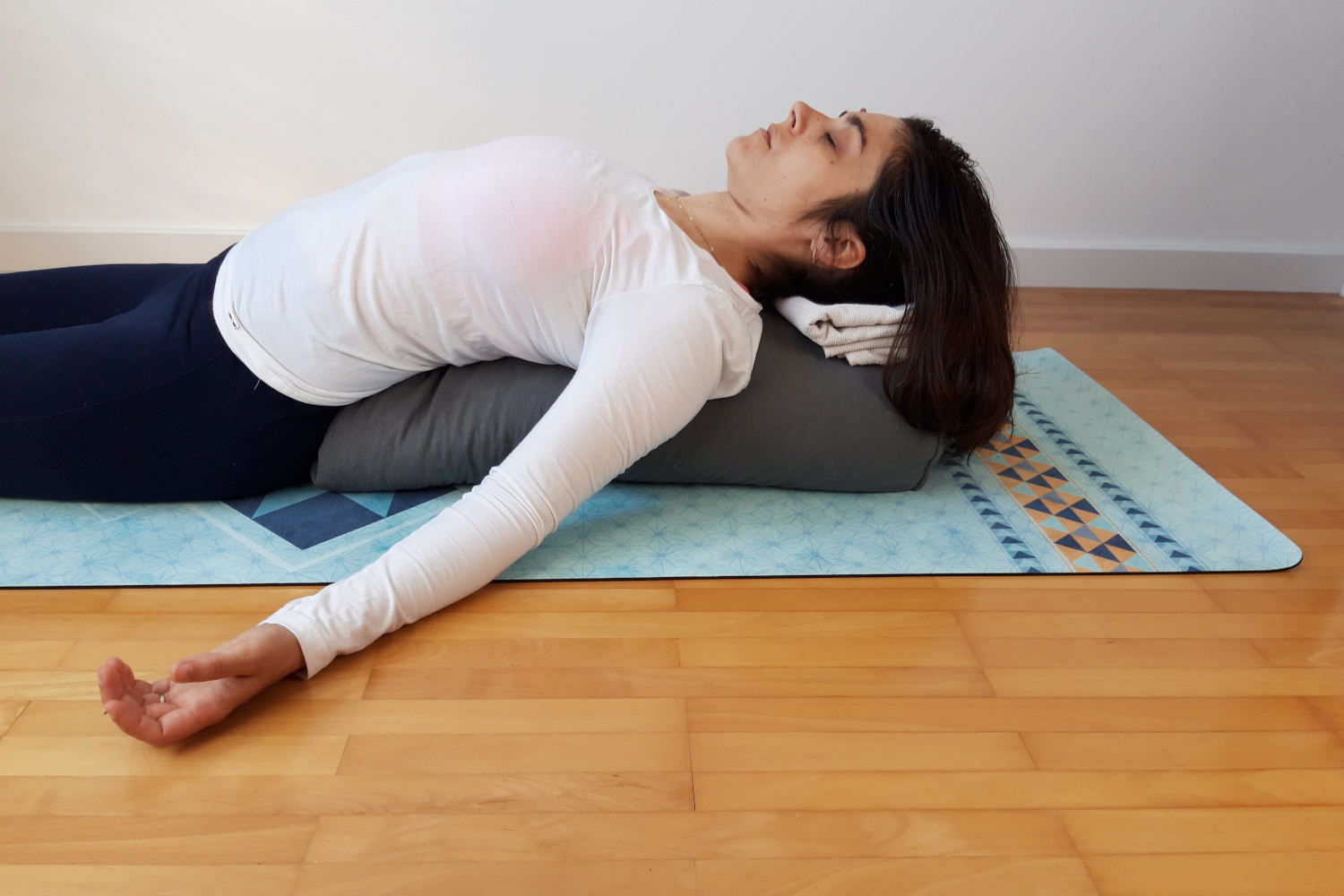
3. Regularly Train Your Cardiovascular System
It is recommended to do endurance training two to three times a week, meaning a workout where your heart beats faster than while sitting quietly for at least 30 minutes. The important thing is to know your current base fitness level and train accordingly. The performance is irrelevant – the main thing is to exercise and have fun! You can go for a run, swim, or bike ride; anything that gently activates and delights your heart is good. Are you on the road with your band, on tour with the orchestra, or at a masterclass with like-minded people? Use the group dynamics and exercise together!You Are Taking a Summer Break …
… and deliberately not playing for a while.
Tip 2: Make a Practice Plan for Resuming, Even Before the Summer Break Begins.

About the Author
Fanny Mas is an accordionist, flutist, and yoga teacher. She teaches both instruments at the Bregenz Music School (AT). In November 2020, she founded IPAIA to support the well-being of musicians...The best way to resume playing is to plan it before the break begins. Most importantly, bring along patience and joy. Even though it can be frustrating, the resumption must proceed in small steps. For example, if you previously practiced for two hours a day, you should not immediately play that long after a weeks-long break. Your muscles need to be gradually retrained. This is the best way to protect yourself from pain and injury.
The 'mindset'—specifically, the joy of 'getting fit again'—plays a significant role. Playing after the break will likely feel less controlled, and you might also notice your body readjusting. Instead of thinking, “I used to be much better at this”, appreciate how quickly your body learns and becomes fit again.
The resumption works best if, before the long break (e.g., 15 minutes at the end of your last practice session), you create a resumption practice plan considering the following points:
It is gentle on the body and includes a warm-up exercise per practice session.
It gradually increases, corresponding to the length of the break and your previous practice routine.
It includes sessions without the instrument: writing fingerings, analyzing scores, preparing for memorization, etc. This way, you can engage with your instrument and music without overloading your body too soon.
Plan pieces or exercises that you enjoy playing. This way, you can look forward to resuming.
When resuming, consider the following:
Trust yourself and do not play longer than planned, even if it's a lot of fun!
Listen to your body and immediately adjust the practice plan if you feel tension or pain.
Be patient with your body and feel gratitude for it; give it time to retrain the muscles.
Be surprised: some things might even work better than before the break!